Language and Literacy

There are so many structured activities out there for teaching language and literacy to children, from flashcards to phonics programs and stencils. When all the research says that children learn best through play and the requirements of the NQF state that children should be at the centre of the program, and have choice and control over their learning, how well do these structured experiences meet the developmental and engagement needs of the children in our care?

Previously I have discussed the difficulty with large group experiences and ensuring that children are really getting out of these what we anticipate the outcomes to be. (These discussions can be seen in http://wp.me/p767Zb-r7 and http://wp.me/p767Zb-yD). Stencils and structured activities provide evidence, but what is the evidence necessarily of? If a child can rote learn to say the letters and their sounds, is that any different than a child learning to memorise the words to a song like twinkle twinkle, or let it go? Do they really understand the application of the content or have they just heard it so many times they have committed it to memory?

When it comes to stencils, are children really understanding the letters and the relationship and A has to an Apple when they trace the letters and write their own copy of the letter and colour in an apple? Or have we collected evidence of other skills such as following instructions, fine motor and pencil control and the ability to complete a task? How do we say for certain that they have knowledge of the letters just because they completed a stencil?

Neither of these types of activities has the child at the focus of them either, they are for ticking a box (sometimes metaphorically or sometimes literally on a check-list). What if a child can’t hold a pencil? Do they not get to learn letters because stencils are the tool of choice? What about children who cannot sit at a group experience and engage with the content because they are using their energy just to sit still, do they not get to learn about letters and their sounds?
It is also difficult, when children go to so many different types of school systems that have so many different styles of curriculum to ensure the way they are taught is the right way, and will meet the needs of the school. Most schools have such specific ways of teaching they would rather do it themselves and just have children interested in letters and language and ready to learn. (See http://wp.me/p767Zb-sE).

There are so many different ways to engage children in language and literacy experiences in our programs that are based on the children and their needs and it comes down to seeing the opportunity, as educators, and seizing this opportunity to help children learn. Here are just a few examples:

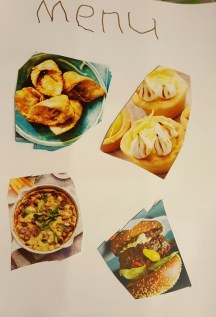
  • Increasing the amount of text and symbols in your service. Whether it be magazines, catalogues, packaging, brochures, books, signs, keyboards, phones, money or similar, all these different types of media encourage and support children’s engagement with literacy. You can also add letters to your loose parts play through items such as scrabble tiles, pieces of alphabet games/puzzles that are broken, or even drawing letters onto stones. Through all these opportunities children are using illustrations to understand the text, they learn to turn pages right to left, they learn to recognise symbols and logos as always representing the same items – what child doesn’t know the McDonald’s logo? Children who can engage with text and symbols in a play based way will connect with the content more, explore, investigate and display their sense of agency in the experience. Educators can role model, engage with and challenge the children during play situations such as using a catalogue to make a shopping list with the children by cutting out what they need to buy and sticking these items to a piece of paper. Older children might want to add their own labels for the items too.
    20160902_183749
  • Engaging in conversations. The best way to increase the amount of language children learn is to increase the amount of language they are exposed to during the day. Talk to the children, sing around the children, with infants you can label actions so they get used to language and start to absorb it all. When using language with children don’t be afraid to use big words, or new words, but make sure they understand the meaning of the word and explain it if necessary. Sometimes adding tools like pretend phones will also increase the amount of language children use, or providing opportunities to re-tell known stories or create their own with puppets, felt pieces of similar resources.
  • Adding literacy opportunities to different play areas. I often like to make letters out of play-dough when I play alongside the children. I don’t make them do it, or even draw attention to what I am doing, instead I draw the attention of those who are interested. Some recognise letters from their name, or can say the name of the letters. Others want to have a turn too. Another thing I like to do when sitting at the sand pit is pick up a stick and draw or write in the sand on the edge. It is amazing how often children who are afraid to pick up a pencil and write on paper, often because of the permanency of this, will draw or write in sand with a stick because it just disappears when someone walks on it. I also add literacy opportunities for children to record their ideas with clipboards, paper and pencils whether they be creating a plan to find treasure in the yard, recording the injuries in the doctor’s office or documenting their findings when searching for bugs in the bushes.
    20160716_192018-1
  • Creating meaningful opportunities for children. Instead of writing a stencil filled with the same letter or a child’s name, which may seem pointless to a child, I get those children eager to write to help me with tasks I needed documented. Signs around the room, labels on drawers in the office, headings for forms given to parents, all created by children. The purpose of this was twofold. Firstly the children were developing their skills in letter formation, awareness of words and using text to make meaning. Secondly those who entered the service saw that learning was at the centre of the program and each child was given the opportunity to engage with learning in meaningful and diverse ways that reflected the needs of the individual children.


If you would like to subscribe to my monthly newsletter for tips, ideas and upcoming events subscribe here http://eepurl.com/b7KQHT

Find time to play

Image result for play quote

We all have very busy schedules and so many different things we need to achieve in our services that sometimes we get caught up in the “jobs” and forget the purpose of out job. We are there for the children and we should be with them as much as possible.

Sure things needs cleaning, filing, documenting, displaying and so much more, but sometimes this takes up so much of our time we end up merely supervising, or may leave only one educator with the children.

Now, when I say play, I don’t mean ask a million questions like you are interviewing the child for a job. Would you be relaxed if every time you explored your environment, tried something new, or even picked something up someone asked “What are you doing?”, “What colour is that?”, “What do you think will happen next?”, “How many do you have?”. Or would you feel overwhelmed, anxious and possibly put off from doing anything around that person?

You might already know all of this, which is great, but you also might have got consumed by the “jobs” or even be new to child care in which case this might help you engage with the children more.

Here are some tips on playing with children that help increase their learning and build relationships:

  1. Get down to the children’s levels: When you are at a child’s level not only do they feel safe and comfortable with your presence but you can also start to see things from their perspective. Whether it be understanding how they are thinking, what they are doing, or how you can challenge or support them. Being at the children’s level also allows you to pre-empt and prevent behavioural issues from occurring as you are right there on hand to support children.
    20161202_103648
  2. Role model: If you are playing along side the children you are likely to demonstrate ways to use the resources that they might not have thought of yet. This challenges their thinking and allows you to scaffold their learning by providing options in a non-threatening and child-focused way. If you were to say “look at the tower I built, who can build one like me? I will show you have I did it..” then that could intimidate children who are not yet confident to try. By just building a stronger base, or perhaps saying “oh no, it fell down, maybe I need a stronger base” then this can help children observe what you are doing and why, to store that information for when they are ready. In this example you have also role-modelled the appropriate emotional response to a tower falling down.
    Image result for be a role model quotes
  3. Put down the technology: There is almost no reason that mobiles, laptops, tablets etc. need to be constantly on the floor with the children. They are a distraction and often the answers they give in response to children’s questions are very technical and not really child friendly. Another piece of technology that gets in the way when it comes to relationships with children is cameras. We do not need to take photos of everything that happens in our services, and often to take a photo we go hunting for the camera or ask someone to bring it over which interrupts the engagement and relationships with the children (both for us and the other educators who are hunting for the camera on our behalf). You may have seen my previous challenge to take no photos for a week and see what impact it has on relationships with the children.
    Image result for no technology
  4. Look at the roster/routine: See whether there are better times in the day that jobs could be done so they don’t interfere with interactions and play time with the children. Whether it be waiting until rest time, waiting until educators are back from lunch breaks or during the quiet morning and evening times. Also see whether things can be done with the children’s help. Get them involved in cutting out photos and putting them into documentation, or choosing items to refill craft pots, all of this is meaningful and build relationships while providing learning opportunities for the children.
    Image result for clipboard checklist

Play time for children is about them, becoming confident, resilient and secure in themselves, so we do not need to be interrupting their play constantly and trying to play alongside everyone. But it is also not a time to “get stuff done” while the children are busy playing. There needs to be a balance between the two and hopefully these points will help you achieve this if you feel you are not finding the balance.


If you would like to subscribe to my monthly newsletter for tips, ideas and upcoming events subscribe here http://eepurl.com/b7KQHT

RARE’s 2017 training calendar is available for download now from HERE


Common Myths around Programming

In my years working in a service and networking with other services, attending training, and gathering information I have found one big, dangerous hazard to the sanity of educators. That is hearing people suggest things as useful and then feeling the need to add these into your program. The more that you hear, the more that you add, until eventually your are crushed under the strain of all these things you “have” to do.

In my travels this year, presenting my “programming without the stress” workshop (which was my most popular by far), I aimed not to tell people what to add, but instead inform attendees about what is required. In doing so I aimed to free educators up to remove things that weren’t working for them and get back to the real reason we become educators, to work with the children and make a difference.

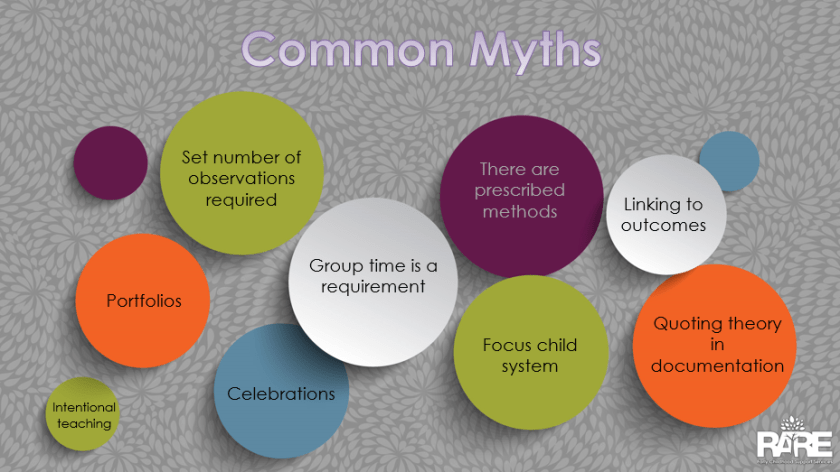
One of the slides in the presentation was about common myths. I thought I would do a post to share these myths with a wider audience and hopefully allow for some reflection as we head rapidly towards a new year.

DISCLAIMER: I am just alerting you to the fact that these are myths and are not actually requirements as designated by the NQS or Regulations. If any of these work for you and give your program meaning and purpose then by all means continue. However if they are one of those “things you do because you have too” then maybe this will give you some freedom to reflect on current practices in your service.

myths

Set number of observations: The Regulations and NQS do not state a number. The regulations states:
Regulation 74(2): In preparing the documentation, the approved provider must—
(a)  consider—

          (i)  the period of time that the child is being educated and cared for by the service; and
          (ii)  how the documentation will be used by the educators at the service; and
(b)  prepare the documentation in a way that is readily understandable by the educators at the service and the parents of the child.

This is the only time a number is mentioned. If you service management has a number of observations that they wish to be completed in a cycle then that is their decision, but this is not mentioned in the requirements of the NQF. It is also important to note that documentation can be observations, daily diary entries, projects, videos, photographs, children’s work. So long as it is assessed and planned from it meets the requirements of documentation.

Portfolios: These were originally created as a means to have all developmental documents for one child in the same spot. Then someone started doing them as scrapbooks and now it can take hours to file artwork and do borders and create pretty books (that may or may not get looked at by families). They are not a requirement of the NQF. In fact the regulations state that observations and assessed documentation (outlined in regulation 74) need only be made available on request.
Regulation 76   Information about educational program to be given to parents
The approved provider of an education and care service must ensure that a parent of a child being educated and cared for by the service is provided with the following information on request—

(c)  a copy of the documents kept under regulation 74 in respect of the child.

Celebrations: Just because we are sent calendars of all the cultural celebrations that occur throughout the year does not mean we need to celebrate them all. If the celebration is reflective of any of the stakeholders of your service and can be celebrated in a meaningful, knowledgeable and authentic fashion that includes the children and develops their cultural competence then these are the celebrations you should be focusing on.

Intentional teaching: This is one of the 8 Practices in the EYLF. It is about having purpose and thought behind what you do. It does not have to be included as a box on the program. Every time you help a child, set up an inviting experience, follow up on a child’s interest, engage with children, ask for input from the family, and so on, this is all intentional teaching.

Group time is a requirement: It isn’t, in fact while groups are mentioned in both the regulations and the NQS is to suggest reflection on the level of learning and relationships that can occur in groups.
It is very difficult to understand what children are taking in when doing a large group experience or lesson. Some children may be focusing all of their energy on sitting still, others might be too afraid to speak up in front of large numbers, some may interrupt the group so others miss out while those children are responded to, and so many more challenges can occur. Also, if you look at the NQS, throughout the standards it refers to “each child”. It is near impossible to confidently state that each child got the intended learning out of a large group experience.
Regulation 156   Relationships in groups
(1)  The approved provider of an education and care service must take reasonable steps to ensure that the service provides children being educated and cared for by the service with opportunities to interact and develop respectful and positive relationships with each other and with staff members of, and volunteers at, the service.

(2)  For the purposes of subregulation (1), the approved provider must have regard to the size and the composition of the groups in which children are being educated and cared for by the service.
NQS Element 1.2.3 – Critical reflection on children’s learning and development, both as individuals and in groups, is regularly used to implement the program.
NQS Element 5.1.3 – Each child is supported to feel secure, confident and included. 

Focus child system: For those of you who are new to this term this is where each educator has specific children that are their responsibility to observe and plan for. This system has a few flaws:
1) Educators tend to only build deeper relationships with those children who are their focus children because they spend more time with them
2) Documentation takes priority and interactions may only occur if your focus child needs and observation.
3) You may end up “stalking” your focus child with a clipboard and paper trying to get them to do something worth observing rather than creating meaningful moments of learning and not worrying about whether they need to be documented or not
4) Only 1 educator’s perspective of that child is the basis for all planning and documentation. If they do not get along, or the educator focuses on specific skills you can end up with a very biased collection of developmental documentation.

Linking to outcomes: Just because the Learning Outcomes are mentioned in both the Regulations (73) and the NQS (1.1.1) it does not mean that you need to link to them, you are however required to show that the program helps children develop across those areas. This can be done through so many different ways including wording in assessments on observations, policies, using pedagogical documentation. In fact, if we use codes and numbers in out documentation we do not train ourselves to fully understand the EYLF nor do we meet the requirement of regulations 74(2)(b) “prepare the documentation in a way that is readily understandable by the educators at the service and the parents of the child.”

Quoting theory in documentation: In Belonging, Being and Becoming: The Early Years Learning Framework it suggests that educators draw on theory to guide their practice and challenge their current processes in a range of areas (p.11). Nowhere does it state in any NQF document that linking to theory needs to be a part of your documentation. There are loads of ways to draw on theory and reflect on how it shapes or challenges practice, including research, study, reflective questions, staff meeting discussion, newsletter etc. I would also question whether referencing Vygotsky in a child’s observation meant that it would be readily understandable by parents.

There are prescribed methods: The whole beauty of the NQF is that you can find something that works for your service, your educators, and your children. So long as you meet the few compliance requirements you can do something truly unique and meaningful. It even says ” There is no prescribed method in the National Law or National Regulations for documenting assessment of children’s learning.” in ACECQA’s Guide to the Education and Care Services National Law and the Education and Care Services National Regulations 2011 (p.54).

I hope this has helped clarify things for you and given you some things to reflect upon. Like I said, if things are working for you, fantastic! If they aren’t then hopefully this will help.

I always suggest to people when adding something in that seems useful and meaningful to take out something that wasn’t working to keep a balance, not just adding and adding and adding until everyone is overwhelmed.

There are a number of training opportunities, previous blog posts and resources that you might find helpful for each of these topics if you are interested. They can be found in the archives of this blog, or on the webiste www.rare.support  either in the store or in the resources page (all of the items on the resources page of the website are free). Don’t forget if you would like a workshop or consultation for your service please contact me through the website.

If you would like to subscribe to my monthly newsletter for tips, ideas and upcoming events subscribe here http://eepurl.com/b7KQHT

RARE’s 2017 training calendar is available for download now from HERE


Getting your team on the same page

Most of us get into early childhood education and care to make a difference to children. Most of us move into management or leadership roles to help guide others in their same goal, and to create procedures and systems to allows everyone to do better and be better. Yet this isn’t always what ends up happening. In my over 16 years of working in the Early Childhood sector I have found that a lot of energy from leaders (whether directors, management or room leaders) goes into managing the staff.

Image result for what you allow is what will continue

I think this quote is really important to reflect on. Spending time addressing issues as soon as they arise, and clearly following through with expectations early on will actually free up time in the long run. If you say something, you should mean it. This involves following through and ensuring everyone understands their requirements and will follow the rule, procedure, expectation every single time. If you want something to happen you have to address it, not assume that other’s will know what is expected from them when they have never been corrected or had a clear conversation about what is required.

Image result for say what you mean and mean what you say quote

There are a few simple steps to increase the level of professionalism and ensure staff members understand the expectations for them…

  • When you see someone do something that does not meet the expectations of their role it is addressed immediately.
  • Children come first at all times… the vast majority of educators should be down at their level, communicating with them and challenging them, not talking to each other or all working on tasks such as cleaning or paperwork.
  • Mobile phones should not be allowed on the floor and should not be used when working directly with the children.
  • Educators should all have goals that they are working towards at all times to keep them motivated and focused.
  • Educators should be role models for the children. If the children cannot sit on tables, neither should the educators. If children have to wear hats outside so should educators.

We set limits and boundaries for children and expect them to work within these, and when they step outside we remind them off the rules. If they need extra support to understand how to stay within the limits and boundaries we provide this and we work together as a team to support children. It might be helpful to think about our staff in the same way:

  • Set clear policies and procedures, and remind people of these when they step outside the requirements.
  • Provide additional support through mentoring, goal setting, training and documentation to help staff know how to meet the requirements.
  • Work together as a team to make sure everyone is on the same page, supporting and reminding each other of the requirements and how to make sure these are met every day.

Image result for teamwork quotes

If you would like to subscribe to my monthly newsletter for tips, ideas and upcoming events subscribe here http://eepurl.com/b7KQHT

RARE’s 2017 training calendar is available for download now from HERE

Respecting the Rights of the Child

As adults we are capable or making decisions about our lives. We can decide what we share with other people. We can decide who takes photos of us and how they use them. We can make choices about what we would like to do with our time. We can decide whether or not we have a social media account and what we share on this. We are afforded privacy when we need to get changed, or are upset. We are allowed to voice our concerns if we feel our rights have been violated and we have been made to feel shamed or embarrassed or ridiculed.

We are asked to consider the rights of the children in our care and to protect these. This goes beyond the issue of child protection and looks at the fundamental rights of the child. These are identified by the United Nations and the purpose of this post is to encourage educators to reflect on how they respect and protect these rights.

unicef

Article 2 – The Convention applies to everyone whatever their race, religion, abilities, whatever they think or say, whatever type of family they come from: Is every child in your service afforded the same rights? Do children with different abilities or cultural backgrounds have support and respect to be included?

Article 12 – Children have the right to say what they think should happen when adults are making decisions that affect them and to have their opinions taken into account: How do you allow children to make decisions in your service? Whether this be activities, routine, food and drink, relationships or celebrations, children have opinions and a right to make decisions from a very young age. This also should be considered when sharing children’s photos, information and development with others outside the service such as through social media or other internet based means that prevent the image from being shared again.

Article 13 – Children have the right to get and to share information, as long as the information is not damaging to them or to others: How much information do you share with children and let them know what is going on and why? When children talk are they listened to, really listened to, or are they just acknowledged?

Article 16 – Children have the right to privacy: When changing children after accidents is their privacy considered? When sharing photographs and information about children on social media is their privacy considered? When children are emotional or engaging in discussions about their behaviour are they afforded privacy?

Article 17 – Children have the right to reliable information from the media. Mass media such as television, radio and newspapers should provide information that children can understand and should not promote materials that could harm children: Do you consider what children access on the internet and videos in your services? Do you take into account those children who have sensitivity to violence, loud noises or monsters when choosing options? Do you consider whether what you are accessing is educational and beneficial, not harmful? Does the use of technology support children’s development or minimising the connection of educators and children to build relationships and extend children’s knowledge?

Article 23 – Children who have any kind of disability should receive special care and support so that they can live a full and independent life: Do you practice early intervention and support children with additional needs to gain support as soon as possible to better their outcomes later in life?

Article 24 – Children have the right to good quality health care, clean water, nutritious food and a clean environment so that they will stay healthy: How well do you maintain your service and provisions you offer children? If they were your own children, in your own home would you increase the level of provisions? Do you raise concerns if you have any or just let it slide because it’s “not your problem” or you don’t want to rock the boat?

Article 28 – Children have the right to an education. Discipline in schools should respect children’s human dignity: How do you support children’s behaviour and development? Do you reflect on current best practice? Do children get shamed, removed from the group, isolated, yelled at or similar?

Article 29 – Education should develop each child’s personality and talents to the full: Does every child have an opportunity to feel included, important and valued? Do educators challenge themselves to build relationships with those who sit outside the “norm” on the vast spectrum of personalities and temperaments?

Article 30 – Children have the right to learn and use the language and customs of their families: Are children supported to be themselves and understand their culture or are they made to conform to the culture of the service?

Article 31 – Children have the right to relax, play and to join in a wide range of leisure activities: How much of your program is structured, teacher lead, outcome based experiences? Is play valued as a means of both educational benefits and relaxation for children who may otherwise be feeling anxious or overwhelmed?

Article 36 – Children should be protected from any activities that could harm their development: Are children pressured to complete tasks they do not feel comfortable in? Do children have to complete certain tasks regardless of their developmental abilities? Are children made to feel anxious, frustrated or isolated if they cannot complete a task?

Hopefully this has provided some opportunities to reflect on how you meet the rights of the child and don’t forget these examples are always great to put in policies to demonstrate HOW you comply, not just a blanket statement to say you do.

Sign up for the monthly newsletter at http://eepurl.com/b7KQHT sent on the 1st of each month


Meaningful Staff Appraisals

Staff appraisals… in most cases it sends shivers down spines. That one day where your whole year is reviewed. I have worked in some services where the appraisal was done by someone who didn’t work in the service with you on a day-to-day basis and based it all on feedback and paperwork. I have worked in services where staff appraisals were almost a blood sport and if you didn’t come out crying then management had failed.

I have also worked in leadership and management roles where I have had educators who were so lacking in self confidence and nervous about the whole experience that it was traumatic for everyone involved. When you look at the requirements they state:

  • Element 4.2.1 – Professional standards guide practice, interactions and relationships.
  • Element 4.2.2 – Educators, co-ordinators and staff members work collaboratively and affirm, challenge, support and learn from each other to further develop their skills and to improve practice and relationships.
  • Element 4.2.3 – Interactions convey mutual respect, equity and recognition of each other’s strengths and skills.
  • Element 7.2.2 – The performance of educators, co-ordinators and staff members is evaluated and individual development plans are in place to support performance improvement.

Nowhere does it say we need to have annual appraisals. Just that educators have their performance evaluated and individual plans are in place. Now, for me, I found it difficult to establish goals for educators when they might achieve them in 3 months, so they were “goal-less” until the next appraisal 9 months later.

I started doing small, regular, less formal, chats with each educator and each educator had a journal. In that journal we documented what success they had identified since the last meeting, what struggles they were having, and we created a goal. The time frame of the next meeting depended on the goal and how they were coping overall. The meetings were anywhere from 2 weeks to 3 months apart.

I say meeting… really, it was a chat. Some took place in the sun outside, some in the room in a quiet corner, some in the kitchen, rarely in the office (because this was the place that caused anxiety and made me appear assertive as I sat on one side of the desk and them the other). These chats served many purposes. They allowed for:

  • the above NQS elements to be met
  • me to build a relationship with my educators (something we sometimes get too busy for)
  • me to create an opportunity to train my educators to reflect on themselves both positively and negatively (as often we are good at seeing the weakness and not the strengths in ourselves)
  • each educator to always be working towards a goal
  • educators to work collaboratively on reaching their goals as some chose to share their goals with others to seek support


As with everything in your service or scheme, if something isn’t working, check the requirements, make sure you stay within them, but don’t be afraid to make changes.

I have created a printable PDF of this system, with instructions and explanations of which requirements are met by using this system, that is available from my online store if you would like to save time and use something that already exists, or you can create your own. The one for sale is available by clicking here, it is only 3 pages long but the last page can be printed as many times as you would like to make a booklet for each educator and keep all their plans and reflections and goals in one place. The cost covers the ongoing licence to use the document in your service/scheme/organisation for all your educators.

Don’t forget if you would like specific support with anything in your team please feel free to contact RARE to discuss your needs as mentoring, consulting and training can be provided.

Sign up for the monthly newsletter at http://eepurl.com/b7KQHT sent on the 1st of each month


Taking the child’s lead

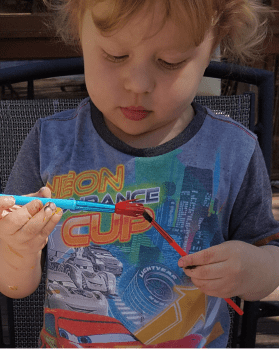
Today I was doing a little photo shoot for some of next year’s webinars and I had the perfect opportunity to make a choice. My “model” was a 2 year old named Jordan and he was curious about everything when it came to the paint. We started painting with sticks, then fingers, then brushes. He was quick to put the painting sticks into the different coloured paint pots to see what would happen. I didn’t stop him as it was just paint and he was exploring, that was the point of the experience.

20161019_103843

The choice came when Jordan started to paint the paint brush. Do I stop and explain that is not what we are meant to be doing and clean up the brushes and paint and pack it away? Or do I take his lead and let go of control? Observe what he is doing and how I can extend on this in safe and appropriate ways?

Untitled.png

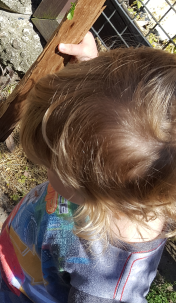
I decided to ask Jordan if he wanted to paint a stick, instead of the paint brush (which by this stage was all white). We went for a search down in the garden and I selected a range of sticks for Jordan to choose from. He chose a piece of wood and on the way back to the painting also picked up a rock he liked.

Untitled1.png

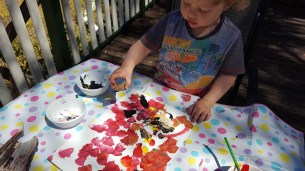
When we got back to the table Jordan started to use the rock as a stamp, transferring black paint onto the paper using the rock.

20161019_105754

He then went to use the large piece of wood to paint with, and after a while (and some suggestions), he chose to use the brushes to paint ON the piece of wood.

This experience was a perfect reminder that when doing activities with children it isn’t about us, and our needs, it is about them and their learning. Jordan was busy exploring, investigating and connecting with his world through the different media he was presented with. We all have choices throughout the day as to whether we need to control the situation or choose to connect with the children and take their lead, giving them control over the program.

Focusing on learning and education

Often I hear people complain about how little we get paid, and how we are not taken seriously, unlike school teachers. I think there are many reasons behind this, some that will take generations to overcome, but one that I talk about a lot in my training is the image we present in our documentation and interactions with families.

Whether it is intentional or not, driven by a lack of self confidence or years of the “child minding” stigma, we, as a profession, seem to focus our conversations about children on fun. We call our services “Happy clowns fun land” and have tv time across the week. We have parents ask how their children’s day was and we talk about what fun they had and the funny thing they did at lunch time.

If you think about schools, most teachers only talk to the parents when it is about the child’s progress. We see the families a lot more than the school and we want to build these partnerships with them, but sometimes we can forget what we are there for in the first place. I’m not saying we shouldn’t talk about our relationships with the children and a funny thing that happened that day, but we also need to focus on the learning and education.

Our documentation can pick up the same thread as the conversations we have, that “fun focused” theme, and our daily diary might look something like this:

documentation

Where is the learning? Where is the education? It might be documentation like this that leads parents to panic in the last 6 months of the year before school that we do not focus on school readiness and where are the structured activities that demonstrate the learning?

This piece of documentation also does nothing to advocate for the skills, knowledge and experience of the educator who wrote it. They weren’t even there, they were called over at the end. Image the message we would send the families in our services if we wrote documentation like this….

ped-doc

There is assessment of learning, there is the role of the educator, there is a clear understanding that it is learning outcome 4 because of the language used. This highlights the skills and abilities of the educator who wrote it and their understanding of the learning that occurred.

Even if you are just having a photo based daily diary of what occurred that day with some captions in it, this can focus on learning too. Instead of “fun playing with water” what about “exploring the properties of water”, or “some beautiful flower paintings” how about “creative representations of nature”.

I’m not saying children shouldn’t have fun, of course they should, but it should be a by-product of the play-based learning.  Parents can see the fun, it is in their children’s happy faces, their dirty clothes, their endless chatter about their day, their eagerness to get back the next day. We might need to give them some help in seeing the learning in our conversations and our documentation because sometimes it isn’t that obvious.


If you would like to subscribe to my monthly newsletter for tips, ideas and upcoming events subscribe here http://eepurl.com/b7KQHT


Yes Miss

This post might be seen as controversial, because what I am about to say goes against a practice  that has been around in services for a long time. I would like to take a look at the practice of having children in early childhood education and care settings refer to the educators with a prefix such as Miss or Mister.

Early childhood is a key time in children’s lives. Children are sent to early childhood settings to form bonds, build relationships and with these as a basis, develop skills that will help them transition into formal schooling and also through life. There is a whole section in the NQS on relationships with children. It is so important in forming a secure emotional base from which children can explore (ECA, 2012). A lot of children also spend more time during a working week in an early childhood setting than they do in the family home, which is a ongoing trend as the price of living continues to grow and the financial pressures on the family increase. Children are also starting care a lot younger than they historically used to, as a direct result of not only the financial pressure but the employment pressure on mothers to resume work quickly so they do not jeopardise their career.

Calling adults Miss or Mister is a sign of respect and authority that (either consciously or subconsciously) builds a barrier between children and adults. Historically it was tradition for children to address adults, including neighbours and family friends, in this fashion. Schools use it because a lot of schools employed a structured, top down teaching style in which children are expected to follow instructions and adhere to the rules and systems of the school. Some view this sign of respect, keeping children at arm’s length to make the teacher and student lines very clear. Some adults employ this technique in a workplace to assert authority and demand respect in the hierarchy.

Having said this, there are a number of schools that are dropping the Miss or Mister title and moving to allowing the students to call their teachers by their first name as they value the relationships it helps build and the flow on effect there is in the student’s work if they feel connected and included. This is also reflective of the modern society where is is less common to expect this tradition to be upheld when engaging with adults. “The president of the Victorian Principals’ Association, Gabrielle Leigh, tells me that it is increasingly common in primary schools in particular for students to address teachers by their first names – she reckons it would be standard practice at about one in 10 schools.” (Dunn, 2015).

Respect is something that should be earned through the way we interact with each other as human beings, not through a title that is thrust upon us. Babies have limited language skills and if we would like them to call us by a 2 word title then that is developmentally more challenging for them than a 1 word title. It can take up to 12 months for infants to go from 1 word to 2 word sentences, which is a period of time that they cannot respond to you by your correct title (DiProperzio, 2013).

I, personally, have worked in the majority of services without the title and I found it does not mean you get less respect from children or families, it means you can build meaningful relationships that come from mutual respect and understanding, not from a title. If we use the prefix as a sign of respect then should we not refer to parents and Mr and Mrs Smith instead of Jack and Kate? I have actually work at a service 10 years ago that transitioned from using the prefix to using first names for educators based on some reflection and there was only positive changes.

Please take a minute or two to reflect on the following:

  • Who decided what children should call the educators at your service?
  • How long ago was this decision made?
  • Is it reflective of current societal shifts?
  • Is it meaningful and purposeful, or just something that we have always done?
  • Is using a title for educators done for the benefit of the educators or the children?
  • Do educators form relationships that are reciprocal, allow for children’s voices and therefore result in respect, or do they assume respect because of the title?
  • Is using a prefix and a 2 word title inclusive of all children regardless of their language development?

If you would like to subscribe to my monthly newsletter for tips, ideas and upcoming events subscribe here http://eepurl.com/b7KQHT

Reference:

DiProperzio. L (2013). Language development milestones: Ages 1-4. Parents. http://www.parents.com/toddlers-preschoolers/development/language/language-development-milestones-ages-1-to-4/

Dunn, M. (2015). What’s in a name? Quite a bit for pupils addressing teachers. Sydney Morning Herald. http://www.smh.com.au/comment/whats-in-a-name-quite-a-bit-for-pupils-addressing-teachers-20150430-1mwozf.html

Early Childhood Australia (2012). Relationships with Children. NQSPLP Newsletter No.36. http://www.earlychildhoodaustralia.org.au/nqsplp/wp-content/uploads/2012/06/NQS_PLP_E-Newsletter_No36.pdf


Queensland professional development adventures

Last week I flew up to Brisbane for my Documentation and Programming training day. I had the biggest turnout so far and it was lovely to get to talk to many different educators and hear their stories. I got some great feedback, especially from Educational Leaders who had just started in their roles recently and were looking for guidance and clarity. We had some great conversations over lunch discussing different approaches to this.

20160921_132222

In the afternoon we discussed child focused planning and I was very impressed with the dedication and commitment during the small group discussions. There were also some very expressive loose parts creations.

In the evening I was invited to a Family Day Care service to present the Programming without the Stress training to a lovely group of FDC educators. It was great to better understand the specific challenges of the FDC services so I can better support them with their documentation.
The educators said that the training was helpful in guiding their practices and explaining things in simple terms to understand the regulations and NQS.
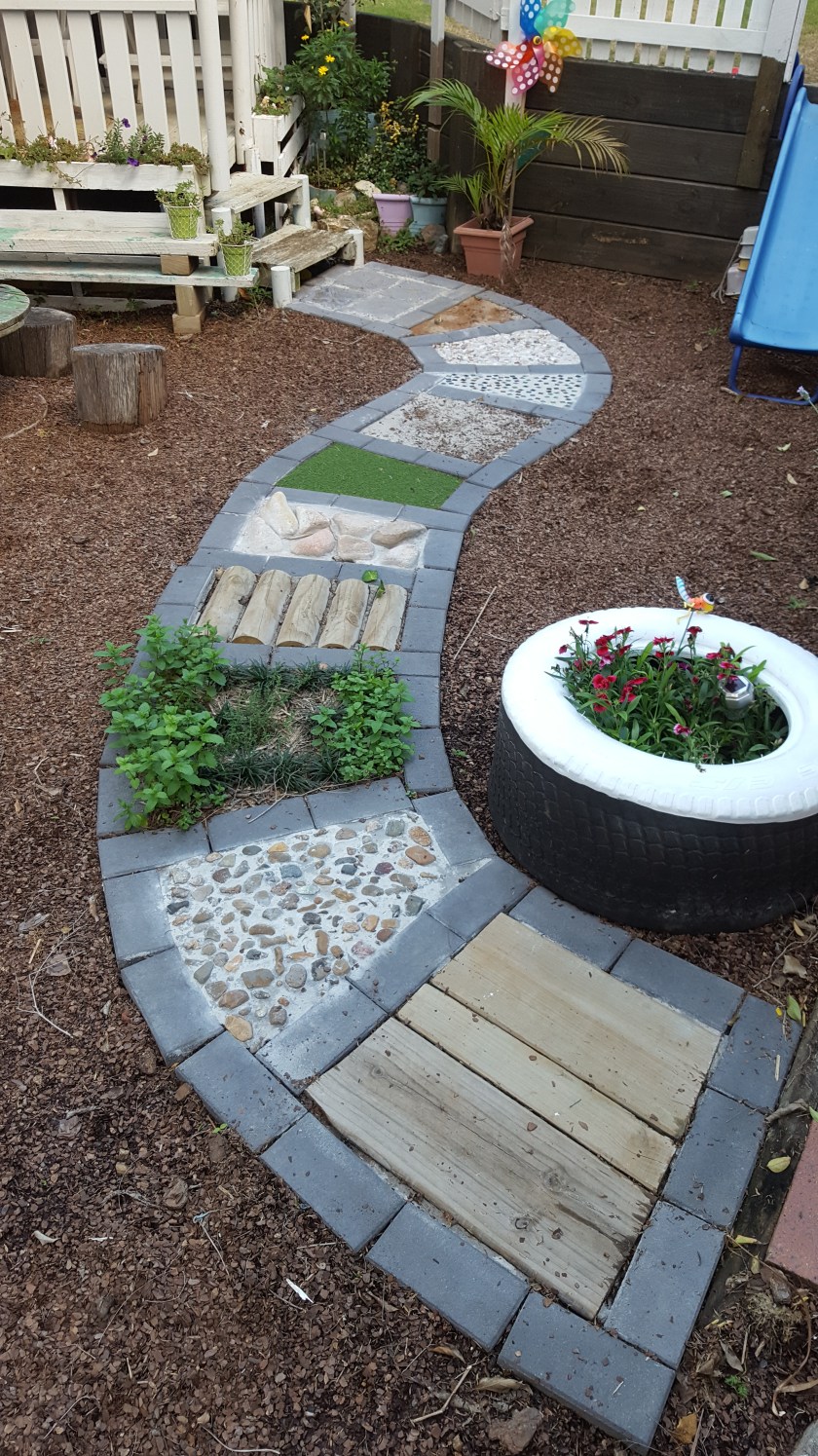
This amazing sensory path was in the outside play area of the service, created by her landscaping husband.

20160922_164003

Friday it was off to Townsville to drive 45 mins down the coast to a service to present a training package created specifically for their needs on Saturday morning. The training was on Programming, planning and time management. The ladies were relieved to hear that they were on the right track and just needed to reflect on a few areas.

20160923_134405

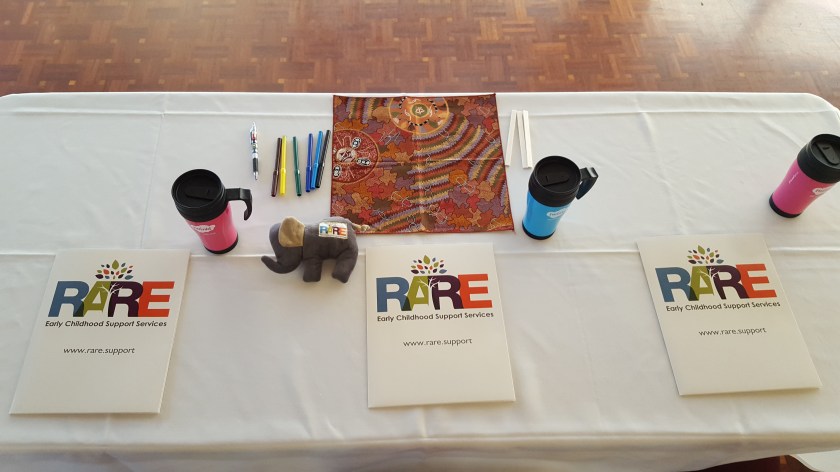
I partnered with Twinkl.co.uk to provide mugs and prizes of subscriptions to access their resources such as recipes, stories and songs.

20160922_082809

I’m off to Perth next, for the documentation training on the 13th October and have already booked in service specific training on the 12th. If you would like any training for your service that meets your needs on any subjects you would like support with please do not hesitate to contact me and book in. This can be arranged for services, groups of services, a FDC scheme or a group of passionate educators in your network. Contact rachel@rare.support to book or to find out about upcoming training go to http://www.rare.support/upcoming-events